

Building a brand to sell: Founders share hard-earned lessons on scaling, fundraising and exit
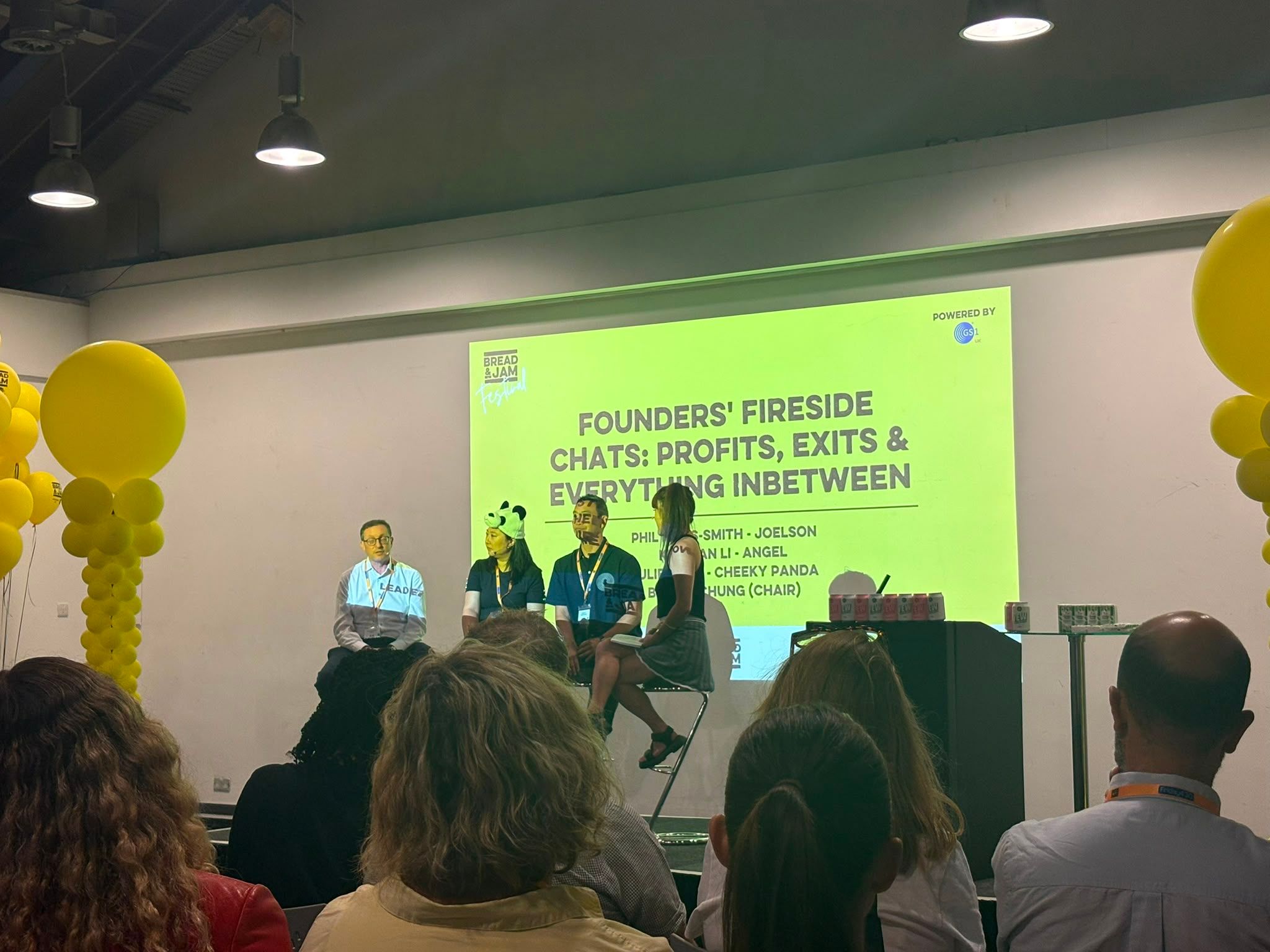
Those themes were explored during a founder fireside discussion at Bread & Jam, where Bonnie Chung was joined by Julie Chen, co-founder of The Cheeky Panda, Kristian Li, entrepreneur and early-stage investor at Angel Invest, and Phil Hails-Smith, partner at Joelson.
The panel offered practical advice for founders at every stage of their journey, from raising investment for the first time to preparing for a successful exit.
Don't wait until you're selling to prepare for an exit
One of the strongest messages from the session was that businesses should start preparing for an eventual exit far earlier than many founders realise.
That means gradually separating the founder from the brand and building a leadership team capable of running the business independently. Buyers want confidence that the company will continue to succeed after the founder has stepped away.
"The more you can prep, the better," was a recurring theme throughout the discussion.
Creating strong governance also forms part of that preparation. The panel encouraged founders to put robust legal structures in place early, including shareholder agreements and articles of association containing provisions such as drag-along rights, rather than leaving difficult conversations until an acquisition is on the table.
Raising investment isn't just about the money
Investment can accelerate growth, but the panel warned founders to think carefully about what they're taking on.
Giving away equity is often an inevitable part of scaling a business, but it's about ensuring it's given to the right people who can genuinely help the business grow.
Founders were also encouraged to be realistic about valuations. While ambitious valuations can be attractive, investors expect the business to grow into them quickly.
Accepting a high valuation means the business needs to grow into it quickly, with investors expecting performance to justify that valuation within six to 12 months.
Equally important is understanding the consequences of raising capital.
The speakers cautioned against pursuing investment simply because it's available, highlighting that some businesses raise significant sums without fully considering the expectations and pressures that come with external funding.
Honest conversations about cash flow, profitability and even insolvency risks are essential if businesses are to survive and thrive.
Investors back businesses, not just products
While product quality remains fundamental, investors are looking at the bigger picture.
Integrity, creativity and consistent product quality all help build confidence, but investors also want to see a business with repeatable growth and a sizeable market opportunity.
Rather than focusing purely on current performance, founders should demonstrate both consistent revenue and profit growth, alongside the scale of the total addressable market.
When it comes to pitching, authenticity also matters.
Kristian Li highlighted that many founders fall into the trap of overselling their business.
"Pitch decks are a balance between being authentic and overselling, and some oversell too much," he said.
Build a business that's bigger than the founder
Another key takeaway centred on leadership.
As businesses scale, founders need to ensure they have the right people in the right roles and avoid becoming the bottleneck for every decision.
Growing too quickly can also create problems internally, with overstretched teams risking burnout and losing the passion that made the business successful in the first place.
Creating clear company principles can help preserve a business's culture through periods of growth and even after an acquisition. The panel cited commitments such as B Corp certification as examples of values that can endure regardless of who ultimately owns the company.
Lean on your network
Finally, the speakers encouraged founders not to navigate growth alone.
Building relationships with fellow founders provides an invaluable source of practical advice, honest feedback and reassurance during the inevitable challenges of growing a business.
Whether raising investment, expanding a team or planning an eventual exit, having experienced founders to learn from can make the journey significantly less daunting.
For founders attending Speciality & Fine Food Fair next April, it's a timely reminder that building a successful brand isn't just about creating products people love. It's about creating a business that's built to last.


)






.png)



.png)