)
)
Sustainability must be part of everyday decision-making for food businesses
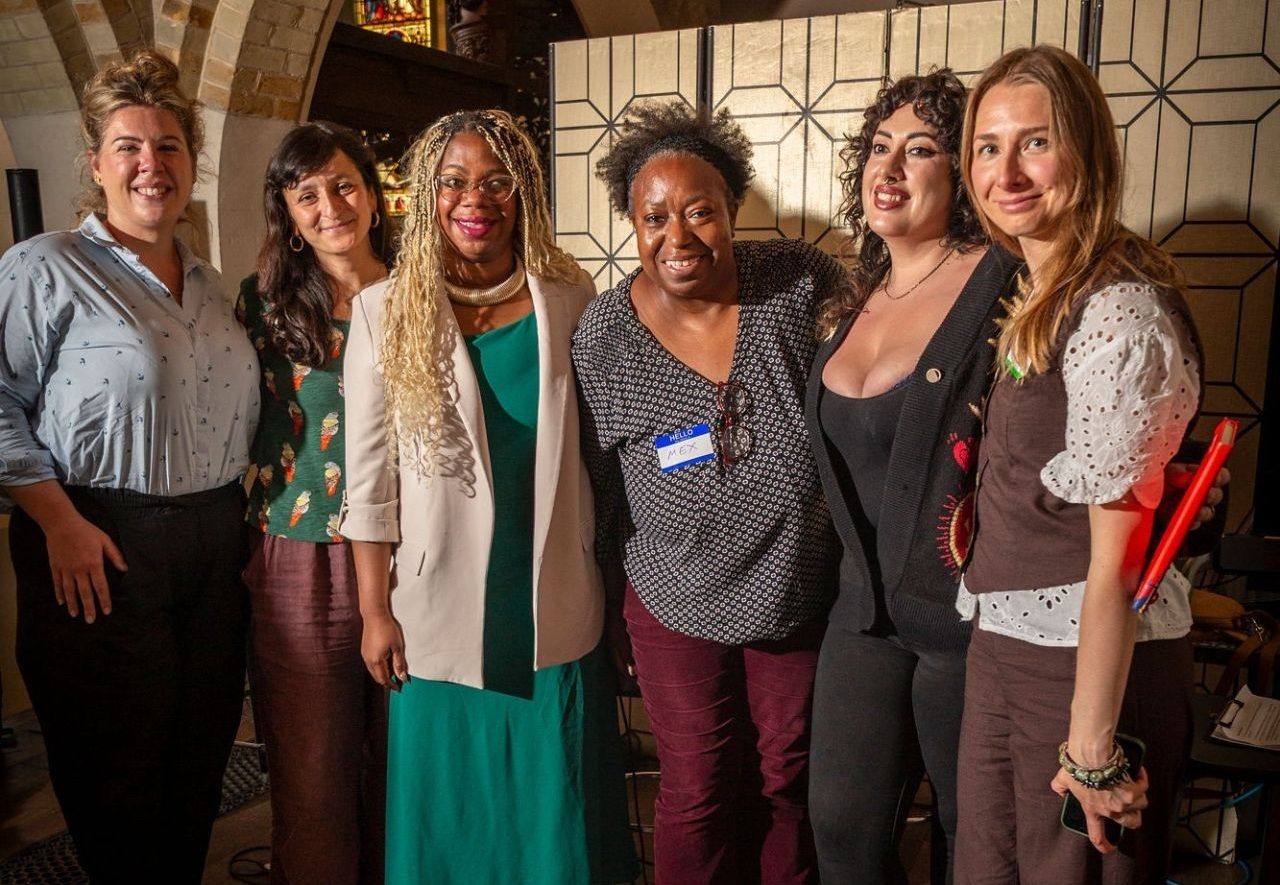
Food businesses need to stop treating sustainability as a standalone project and start embedding it into everyday decision-making, according to speakers at Sustainable Gastronomy Day 2026.
Held at Mercato Mayfair and organised by Women in the Food Industry, the event brought together chefs, sustainability experts, nutrition specialists and food industry leaders to explore the future of sustainable gastronomy. The second panel of the day, hosted by Mex Ibrahim, founder of Women in the Food Industry, focused on the practical steps businesses can take to make sustainability part of their operations.
The discussion featured Daria Liutcerina, independent food safety consultant; Ayesha Kalaji, chef-owner of Queen of Cups; Nureen Glaves, nutrition specialist and educator; Sareta Puri, Diversity Outreach Coordinator at Sustain; and Lauren Johnson, ESG Executive at Aramark UK.
Bringing together expertise from food safety, nutrition, community engagement, catering and hospitality, the panel explored how organisations of all sizes can embed sustainability into procurement, menu development, staff engagement and food waste reduction.
A common theme emerged throughout the session: sustainability is most effective when it becomes part of organisational culture rather than a standalone initiative.
Lauren Johnson, ESG Executive at Aramark UK, summed up the sentiment early in the discussion.
"What we often get wrong is treating sustainability like it's a campaign rather than culture," she said. "It's not a project, it doesn't have a start and end date."
The panel began by addressing some of the most persistent misconceptions around sustainability. Chief among them was the belief that sustainable food is inevitably more expensive.
Kalaji challenged this assumption directly.
"One of the greatest misconceptions is that sustainability is prohibitively expensive," she said. "Some of the easiest sustainability initiatives are cost-effective or even cost-saving."
The relationship between sustainability, affordability and accessibility became a recurring theme throughout the discussion. While organic and sustainably sourced ingredients are often perceived as premium products, several speakers argued that businesses have more control over affordability than many realise.
For Sareta Puri, the starting point is understanding customers and designing menus that offer choice.
"As a business owner it's about understanding what your customers want and need," she said. "Does your menu have an affordable option? Understanding the margins and where you make your money."
Kalaji argued that ethical sourcing should not be reserved only for those who can afford premium prices.
"I don't think ethics should be based on whether you can afford it or not," she said. "I take it as a personal responsibility to provide sustainable food to different brackets."
Drawing on her own experience as a restaurateur, she explained how working with local suppliers and making use of less fashionable cuts of meat can help keep prices accessible without compromising quality.
"A steak I would obviously charge a lot for. I'll choose short rib, shin and harder-to-work-with cuts that have great flavour and I can put them on my menu at a more affordable price point."
She added that reducing waste and managing energy use effectively creates savings that can be reinvested into better ingredients and more sustainable sourcing.
For Nureen Glaves, sustainability is inseparable from health and nutrition.
"Sustainability is a lot about health and what is accessible," she said. "It's about going back to old traditions and techniques and building environments where consumers can access healthier foods."
Glaves described her work using everyday ingredients and alternative cooking techniques to improve gut health, increase nutritional value and encourage healthier eating habits. The discussion highlighted how sustainability conversations increasingly overlap with public health objectives.
When asked where businesses should begin if they feel overwhelmed by sustainability, the panellists emphasised starting small and focusing on changes within their control.
Puri pointed to the range of free resources available to businesses and encouraged operators to look closely at areas such as energy suppliers, packaging and procurement.
Importantly, she stressed the need to involve staff throughout the process.
"A lot of businesses don't involve their teams and make the decisions from a high level," she said. "The people in your business are making decisions every day and living and breathing it."
This focus on culture and employee engagement resurfaced repeatedly throughout the session.
For Kalaji, sustainability is not a department or an individual responsibility.
"For me sustainability isn't a department or a person," she said. "It's a lot of small decisions every day and a filter that all of our decisions should go through."
She described how Queen of Cups works closely with local producers, including a Somerset grower cultivating Syrian chillies specifically for the restaurant. Building relationships between chefs and producers helps strengthen understanding of ingredients, provenance and seasonality.
The panel also explored examples of operational changes delivering measurable impact.
Johnson highlighted Aramark's work on plant-forward menu development and food waste reduction initiatives.
"It's not about asking someone to go vegan," she said. "It's about emphasis and meat playing a smaller role."
Examples included blended products such as burgers combining meat and mushrooms, alongside technology that tracks food waste in real time and identifies where waste is occurring within kitchens.
Johnson also highlighted the company's "Wipe Out Waste" initiative, which focuses on repurposing ingredients that may previously have been discarded and finding productive uses for them elsewhere within operations.
Traditional food cultures emerged as another source of inspiration.
Reflecting on her upbringing, Kalaji argued that many sustainable practices have existed within communities for generations.
"If you told my Syrian grandmother she was cooking sustainably she wouldn't know what you meant," she said.
Seasonal cooking, preserving surplus produce and reducing reliance on meat were all part of everyday life long before sustainability became an industry term. Kalaji explained that she continues to use techniques such as fermentation and preservation to make use of seasonal gluts, particularly when suppliers have excess produce available.
The discussion also highlighted the importance of recognising cultural differences when talking about sustainable food.
Puri warned against oversimplifying food choices or judging different communities through a single sustainability lens.
"We don't want to demonise food choices and that's an important part of the conversation," she said.
She argued that conversations around sustainable food need to reflect the diversity of communities, cuisines and regional food cultures that exist across the UK.
The role of employee engagement was another recurring topic.
"Staff engagement training is everything," Johnson said. "If your staff aren't buying into what you're doing then nothing sticks."
She argued that businesses must communicate not only what changes are being made, but why they matter. When employees understand the purpose behind sustainability initiatives, they become part of the culture rather than another item on an operational checklist.
The session concluded with a perspective often overlooked in sustainability discussions: food safety.
Drawing on her experience in both manufacturing and hospitality, Daria Liutcerina argued that sustainability and food safety should work hand in hand.
"HACCP should be workable for the business," she said. "It shouldn't be too complicated."
Liutcerina highlighted traceability as one of the industry's biggest opportunities, noting that many businesses still have significant gaps in their systems. Better traceability, clearer supplier relationships and more effective stock management can improve both sustainability outcomes and operational efficiency.
She also pointed to a common issue across hospitality kitchens: overstocked refrigeration units.
Businesses, she argued, need a clearer understanding of why food is being stored, how it will be used and when it will be required.
Across the discussion, the panellists repeatedly returned to a simple but powerful message. Sustainable businesses are not built through grand gestures or one-off initiatives. They are built through hundreds of everyday decisions around sourcing, waste, culture, training, nutrition and operations.
Rather than treating sustainability as a separate project, businesses should view it as a lens through which every decision is made. As the panel demonstrated, the most effective changes are often the smallest, most practical and most consistent.
)
)
)
)
)